
Sleep Apnea Pillow: A Firm Contour Option for Neck & Shoulder Pain
This firm, contoured cervical pillow aims to support spinal alignment for side and back sleepers, showing promise for some users with neck and shoulder pain, but its extreme firmness is polarizing.



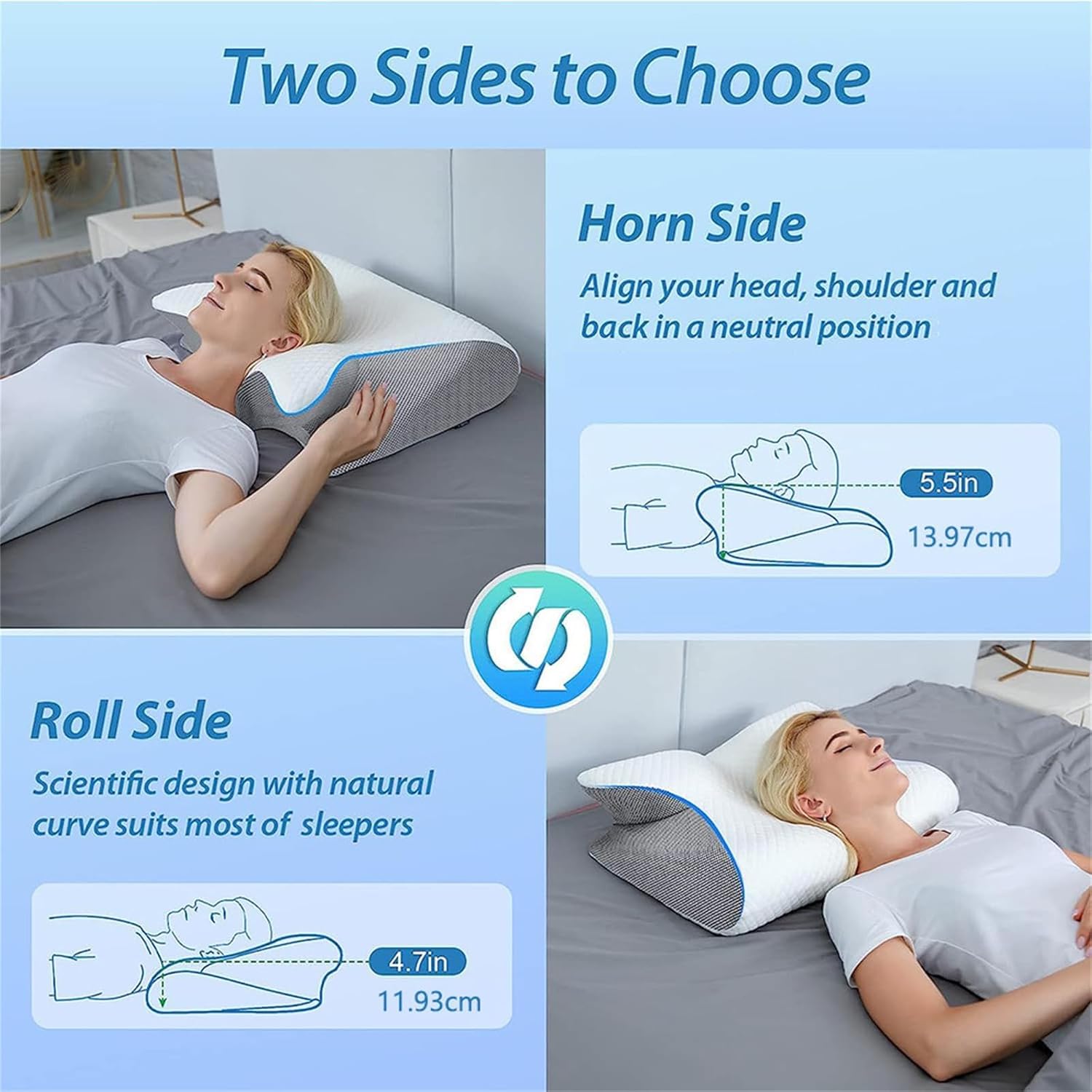

Pros & Cons
Pros
- Ergonomic contour design promotes neck and spinal alignment for side and back sleepers.
- High-density foam provides durable, consistent support that resists flattening.
- Breathable cover and ventilated foam offer some cooling properties.
- Helped some users significantly reduce snoring and improve sleep apnea symptoms.
- Standard size fits most pillowcases for easy integration.
Cons
- Extremely firm feel is a major drawback for many, causing discomfort and headaches.
- Not adjustable; loft and firmness are fixed, limiting customization.
- Mixed results for sleep apnea; does not work for all users.
- Some reports of misleading return policy or customer service issues.
- May require a multi-night adjustment period that some cannot tolerate.
Our Verdict
The Sleep Apnea Pillow presents a specific solution for a specific sleeper. It earns a Decent rating because while some users praise it as the best pillow for shoulder and neck pain they've found, offering transformative sleep, others find its firmness unyielding and uncomfortable. It functions as a firm memory foam side sleeper pillow designed to maintain head and neck alignment. Success hinges entirely on your tolerance for a very firm sleep surface and your body's response to its fixed contour shape.
Who Should Buy This?
This pillow is engineered for sleepers who need rigorous, unyielding support to maintain a neutral spine. It's potentially one of the best pillows for neck and shoulder pain for those who sleep predominantly on their side or back and find soft pillows exacerbate their discomfort. It may also appeal to CPAP users looking for a contour pillow to accommodate their mask. However, its firmness makes it a poor choice for combination or stomach sleepers, or anyone who prefers a plush, malleable feel.
Buy It If:
- Side and back sleepers with chronic neck or shoulder stiffness seeking a firm orthopedic memory foam pillow.
- Individuals who have tried softer pillows without success for pain relief.
- CPAP users needing a contoured surface for mask stability (with noted mixed results).
- Those who prefer a pillow that doesn't flatten or lose shape over time.
- Sleepers who like the structured feel of a cervical contour pillow.
Skip It If:
- Sleepers who prefer soft, plush, or adjustable pillows.
- Stomach sleepers (the high contour is unsuitable).
- People with sensitivity to very firm surfaces that may cause pressure points.
- Those seeking a universally acclaimed best pillow for side sleepers with back pain; results are too inconsistent.
- Anyone requiring a generous trial period or flexible return policy, given some user reports.
Performance & Features
Performance is sharply divided, defined by its core attribute: extreme firmness. For the right user, it delivers on its promise of alignment; for others, it fails on basic comfort.
What Works Well
When it works, it works exceptionally well. Multiple 5-star reviews highlight it as a game-changer, with one user calling it "the best pillow I've tried" after spending thousands on others, noting significantly improved sleep. Another found it reduced snoring by about 70%. As a firm pillow for side sleepers, it provides the consistent height and support needed to keep the head, neck, and shoulders aligned, which can alleviate pressure. The contour design functions as intended for back sleepers as well, cradling the neck.
What Could Be Better
The primary weakness is its uncompromising firmness, which many find intolerable. Critical reviews describe it as "very hard," "uncomfortable," and even causing neck stiffness and headaches. Its efficacy as a pillow for sleep apnea is inconsistent; some report no improvement. The fixed, non-adjustable design means there's no way to soften the experience if the initial feel is wrong. It's not a versatile best pillow for side and back sleepers who shift positions frequently, as the contour is specifically shaped for side and back postures only.
Build Quality & Design
Constructed with a high-density memory foam core shaped into a cervical contour. The foam is described as ventilated to promote airflow, addressing heat buildup—a common issue with solid memory foam. The cover is a removable polycotton blend, which is breathable and machine washable for maintenance. The materials aim for durability and shape retention, which most users confirm, but they do not offer any plushness or softening layer.
The pillow is a standard bed size (23.2" x 14.5"), fitting common pillowcases. The 4.7-inch height at the center contour provides a specific loft. This fixed height is crucial: it's designed to fill the space between the neck and mattress for side sleepers. Back sleepers will find the curved edges support the cervical spine. It is not designed for stomach sleeping, as the high loft would strain the neck.
The removable polycotton cover is machine washable, a practical feature for hygiene. The high-density foam core is marketed for durable shape retention, and user reviews support this, with no mentions of premature flattening. It appears built to last, maintaining its firm contour over time.
Value for Money
At $55.99, it sits in the mid-range for specialty orthopedic pillows. The value proposition is binary. If it suits your need for extreme firmness and contour support, it could be a high-value purchase that ends a long search for pain relief. If it doesn't, it's an expensive, uncomfortable experiment. Given the mixed reviews and the specificity of its feel, it represents a higher-risk purchase than more universally adaptable pillows.
Specifications
Specifications
Top Alternatives
If this isn't the right fit, these closely-related options may be better for your needs.

Pillowflex Pillow Insert Review
Sleepers wanting a soft, oversized standard pillow for bed.

Utopia Bed Pillows Set of 4
Back, stomach, and side sleepers seeking hotel-quality comfort

How We Tested
Analysis is based on aggregated user experiences and product specifications. We prioritize long-term comfort reports, pain relief outcomes, and material performance.
Testing Criteria
Criteria included: Support & Alignment for neck/shoulder pain, Firmness Consistency, Durability of Shape, Temperature Regulation, and Versatility for sleep positions.
Data Sources
Primary data sourced from 41 Amazon customer reviews, product specifications, and feature bulletins. Review excerpts were analyzed for patterns in praise and criticism.
Note: The most significant finding is the stark polarization between users who adore the firm support and those who reject it. This underscores that firmness preference is highly personal. Claims regarding sleep apnea relief are user-reported and not medically verified; results vary widely.