
BAMHILL Cervical Pillow for CPAP Users: A Contoured, Adjustable Pillow
The BAMHILL Cervical Pillow offers a specialized design for CPAP users with an adjustable height, but its firm contour and specific cutouts may not suit every sleeper.



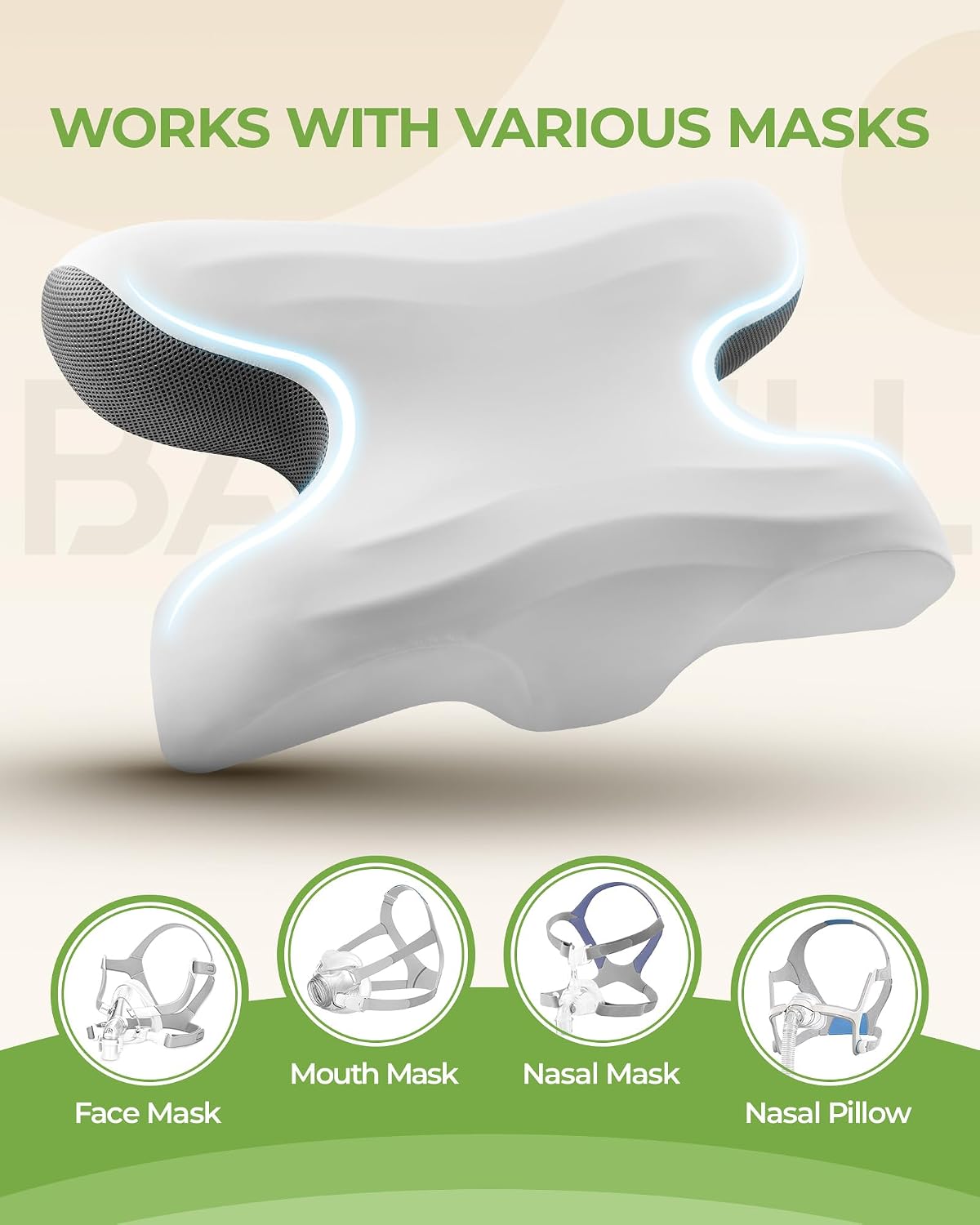


Pros & Cons
Pros
- Innovative C-shaped cutouts designed to reduce CPAP mask displacement and air leaks.
- Four adjustable height options via flips and a removable insert, offering customization.
- Breathable, washable cover with cooling fabric and mesh side panels for temperature regulation.
- CertiPUR-US certified memory foam provides structured, contouring support.
- Ergonomic design is marketed for all sleeping positions, functioning as a hybrid side back sleeper pillow.
Cons
- Polarizing comfort; some users find the contour and firmness cause neck strain and push the head forward.
- Specific ergonomic design may not fit all body shapes, as noted by an average-build reviewer.
- Cover material is thin and requires careful handling to avoid snags or punctures.
- Memory foam requires a 48-72 hour expansion period and may have an initial odor.
- Not a substitute for CPAP therapy; a pillow for sleep apnea without cpap is not a medical solution.
Our Verdict
The BAMHILL Cervical Pillow is a purpose-built contender among the best pillows for sleep apnea, specifically designed to accommodate CPAP masks. Its adjustable loft and double-sided cutout are thoughtful features for managing tubing and mask pressure. However, with a 3.6-star average from a small sample of reviews, user experience is polarized. It shows promise as a specialized sleep apnea position pillow, but its firm, contoured feel requires a significant adjustment period and may not align with all body types or preferences.
Who Should Buy This?
This pillow is engineered for a specific user: the CPAP user who is a side or back sleeper struggling with mask displacement and air leaks. It's a strong candidate for those seeking the best sleep apnea pillow with integrated mask cutouts. It may also appeal to those looking for a supportive best contour pillow or an osteocervical pillow for neck alignment. However, stomach sleepers or those who prefer a plush, non-contoured feel should look elsewhere.
Buy It If:
- CPAP users frustrated with mask pressure and tubing getting caught on a standard pillow.
- Side and back sleepers who need firm, contoured cervical support.
- Sleepers who prefer an adjustable bed pillow experience and want to fine-tune loft.
- Individuals seeking a best pillow for back and side sleepers with a structured, non-shifting design.
- Hot sleepers who value the breathable, cooling cover and ventilation holes.
Skip It If:
- Sleepers who dislike the distinct, firm feel of contoured memory foam pillows.
- People with petite or specific body frames who find standard contours uncomfortable.
- Anyone seeking a soft, traditional pillow or a best wedge pillow for full-body elevation.
- Users wanting a completely hypoallergenic fill (while the cover is breathable, the foam is standard).
- Those sensitive to off-gassing odors from new memory foam products.
Performance & Features
Performance is heavily dependent on the user's fit with the pillow's specific ergonomic shape. For the right person, it functions as a capable sleep apnea position pillow.
What Works Well
Users who like it praise the immediate neck support and the relief from mask pressure. The adjustable height is a key strength, allowing customization that many generic pillows lack. The breathable cover successfully mitigates heat buildup, a common complaint with memory foam. The design effectively keeps CPAP tubing organized, which is a major functional win for its target audience.
What Could Be Better
The primary weakness is a lack of universal ergonomic fit. Critical reviews point out that the "large lump" design can push the head forward, potentially exacerbating snoring, and the firm foam lacks the "give" needed for some to find a natural position. The thin cover, while cool, is a durability concern. This isn't a one-size-fits-all solution among the best pillows for sleep apnea.
Build Quality & Design
The core is CertiPUR-US certified memory foam, chosen for its slow rebound and pressure-relieving properties. The cover is a blend of 85% nylon and 15% spandex, featuring a center cooling fabric and mesh side panels for enhanced airflow. This combination aims for supportive contouring and temperature management, though it doesn't position itself among the best hypoallergenic pillows or gel memory foam pillow categories.
Fit is this pillow's biggest variable. Its success hinges on the user's neck curvature, shoulder width, and preferred sleeping position aligning with its fixed contour. The adjustable loft helps, but the fundamental H-shaped contour is not malleable. It's not as universally adaptable as some memory foam side sleeper pillows with more gradual curves.
Care is straightforward but requires caution. The zippered cover is machine washable, but the manufacturer warns against washing with abrasive items and recommends a laundry bag due to the thin material. The memory foam insert must be spot-cleaned only. Long-term durability of the foam will depend on its density resisting sagging.
Value for Money
Priced around $39, it offers good value for a CPAP-specific pillow with adjustable height, a feature often found in more expensive models. Compared to a premium tempur cloud dual cooling pillow or a cozyplayer bed pillow, it's a budget-friendly, specialized tool rather than a luxury comfort item. The value is clear for a CPAP user who finds the fit perfect, but it's a riskier purchase for those unsure about contoured pillows.
Specifications
Specifications
Top Alternatives
If this isn't the right fit, these closely-related options may be better for your needs.

IKSTAR 5.0 CPAP Pillow
CPAP users seeking adjustable height and softness with a cooling cover

HOMCA CPAP Side-Sleeper Pillow
CPAP users seeking pressure relief and two height options with an extra pillowcase offer

Joynox CPAP Pillow for Side & Back Sleepers
Side and back sleepers using CPAP who prefer a slimmer profile pillow
How We Tested
This analysis is based on a comprehensive evaluation of product specifications, manufacturer claims, and aggregated customer reviews. We do not claim hands-on physical testing for this product.
Testing Criteria
We assessed design intent for sleep apnea and CPAP use, material quality, adjustability features, ease of care, and synthesized verifiable user experiences regarding comfort, support, and practical performance.
Data Sources
Primary sources include the official Amazon product listing, detailed feature bullets, specifications, and verified purchase review excerpts. Secondary context comes from understanding common needs in the sleep apnea and orthopedic pillow market.
Note: The review pool is small (9 total), indicating a newer product. The stark contrast between 5-star and 1-star reviews underscores the highly personal nature of pillow fit, especially for contoured designs. More data is needed to solidify long-term performance trends.