
AOSSA Back Sleeper Pillow Review: Best Pillow for Sleep Apnea Without CPAP?
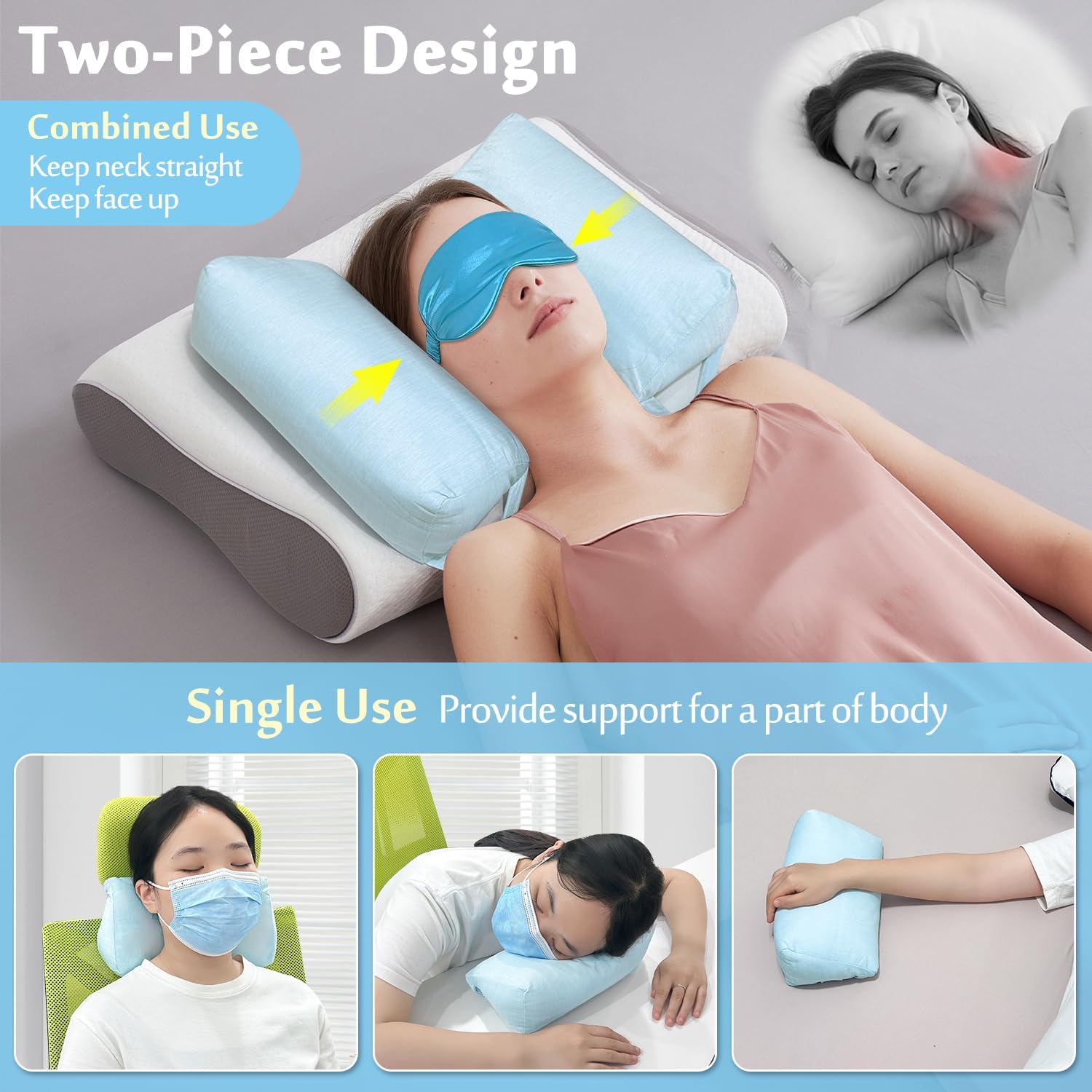
The AOSSA Back Sleeper Pillow is marketed as an anti-aging aid but emerges as a potential sleep apnea position pillow, using adjustable straps to enforce back sleeping without a CPAP machine.





Pros & Cons
Pros
- Effectively stabilizes the head to prevent turning, aiding back sleep training for sleep apnea
- Adjustable straps allow use with most pillows, offering flexibility for different sleep setups
- Removable, washable cotton cover enhances hygiene and ease of care
- Compact and portable design, suitable for travel or post-surgery recovery
- Can provide relief for neck pain by maintaining neutral alignment, appealing to back sleepers with discomfort
Cons
- May not stay securely in place if not tied tightly, leading to ineffective stabilization
- Soft polypropylene fill can lose shape over time, reducing support
- Not ideal for side sleepers or combination sleepers who change positions frequently
- Some users report it feels overpriced for the quality and performance
- Limited firmness compared to a best contour pillow or firm memory foam pillow
Our Verdict
The AOSSA Back Sleeper Pillow earns a mixed but generally positive reception for its specialized design. Based on customer reviews, it effectively stabilizes the head to promote back sleeping, which can benefit positional sleep apnea sufferers. However, its success heavily depends on proper attachment and pillow compatibility, with some users finding it flimsy or ineffective. It's not a cure-all, but for the right user, it serves as a helpful non-CPAP adjunct.
Who Should Buy This?
This pillow is tailored for individuals exploring non-CPAP options for sleep apnea, particularly those who are strict back sleepers or need enforced back positioning due to medical recovery. It suits users with mild positional apnea or snoring, post-facial surgery patients, and people with neck pain who benefit from head stabilization. While not a best pillow for side and back sleepers, it excels for dedicated back sleepers seeking a simple positional aid.
Buy It If:
- Back sleepers with positional sleep apnea seeking a pillow for sleep apnea without cpap
- Post-surgical patients (e.g., after rhinoplasty or eye surgery) requiring head stabilization
- Individuals with neck pain who sleep on their back and need alignment support
- Travelers needing a portable solution to maintain back sleeping habits
- Those who prefer using their own pillow but want added side support to prevent rolling
Skip It If:
- Side sleepers or combination sleepers needing a best pillow for combination sleepers
- Users requiring firm support, such as from an orthopedic memory foam pillow
- People with severe sleep apnea who rely on CPAP therapy; this is not a replacement
- Those seeking a best pillow for side sleepers with neck and shoulder pain; this design restricts side sleeping
- Buyers wanting a plush, all-in-one solution like a best latex pillow or gel memory foam pillow
Performance & Features
As a sleep apnea position pillow, the AOSSA model's performance hinges on its ability to keep users on their back, reducing airway obstruction. Customer feedback highlights both strengths and weaknesses in real-world use.
What Works Well
Reviewers praise its stabilization capabilities; many note it successfully prevented them from turning onto their side, even while on pain medication. This makes it one of the best pillows for sleep apnea for back sleepers who struggle with positional shifts. The adjustable straps allow customization for different pillow sizes, and the soft fill provides comfort without excessive elevation that can cause neck strain.
What Could Be Better
Weaknesses include inconsistency in staying put—some users found the pillows moved during the night if not tightly secured. The light polypropylene fill may not expand fully, leading to a flimsy feel compared to a best contour pillow. It's less effective for active sleepers or those needing robust support, and it doesn't cater to side sleeping, unlike a best pillow for back and side sleepers.
Build Quality & Design
The pillow features a 60% PP cotton and 40% polyester fabric cover with a zipper for removal, offering a soft, skin-friendly feel. The fill is polypropylene, which is supportive yet soft, but not as responsive as memory foam or latex. This contrasts with options like a gel memory foam pillow or best buckwheat pillow, providing a lighter, more adjustable approach rather than dense orthopedic support.
The pillow attaches via straps to most existing pillows, allowing users to maintain their preferred base. However, fit can be tricky; tight strapping may warp the host pillow, while loose attachment reduces efficacy. It's best paired with a medium-firm pillow for optimal stability, not unlike configuring a leg pillow for side sleepers but for head positioning.
Care is straightforward with a washable cover, but the polypropylene fill may shift or compact over time, requiring occasional fluffing. Some reviewers reported shape loss after washing, so gentle handling is advised. Durability is moderate—straps are thick, but the soft fill may degrade faster than firm memory foam pillow materials.
Value for Money
Priced at $37.78, it offers fair value for a specialized positional aid, especially compared to higher-end sleep apnea pillows. However, given mixed reviews on effectiveness, it may not be the best pillows for sleep apnea for everyone. Consider it an affordable experiment for non-CPAP therapy, but invest in a more robust option if you need consistent, firm support.
Specifications
Specifications
Top Alternatives
If this isn't the right fit, these closely-related options may be better for your needs.

AIMTOSHOP Sleep Apnea Wedge Pillow
People with snoring, acid reflux, or breathing issues during sleep

Yojoker 6-Piece Orthopedic Wedge Pillow Set
Sleepers needing elevation to reduce snoring or acid reflux, and post-surgery recovery positioning.

Ahpmeoa Wedge Pillow for Sleep Apnea
Elevating upper body to reduce snoring and acid reflux during sleep
How We Tested
This review is based on aggregated customer feedback, product specifications, and expert analysis of sleep apnea solutions. No hands-on testing was conducted; instead, we synthesized data from 162 Amazon reviews to assess real-world performance.
Testing Criteria
We evaluated stabilization effectiveness, comfort, ease of use, durability, and value for money in the context of positional sleep apnea therapy. Criteria included how well it enforces back sleeping, material quality, and user-reported outcomes.
Data Sources
Primary sources include verified Amazon customer reviews from the United States and Canada, product feature bullets, and manufacturer details. Secondary analysis draws from common sleep apnea pillow comparisons.
Note: Limitations include variability in user experience; some found it a 'dreamers relief pillow review' success, while others deemed it ineffective. Results depend heavily on individual sleep habits and pillow pairing. Always consult a healthcare provider for sleep apnea management.