
Joynox CPAP Pillow Review: Height-Adjustable Support for Side Sleepers
The Joynox CPAP Pillow offers adjustable, firm memory foam support designed to reduce mask leaks and neck strain, making it a strong contender for the best pillow for side sleepers with CPAP equipment.



Pros & Cons
Pros
- Excellent firm support for neck and shoulder alignment, ideal for side sleeping.
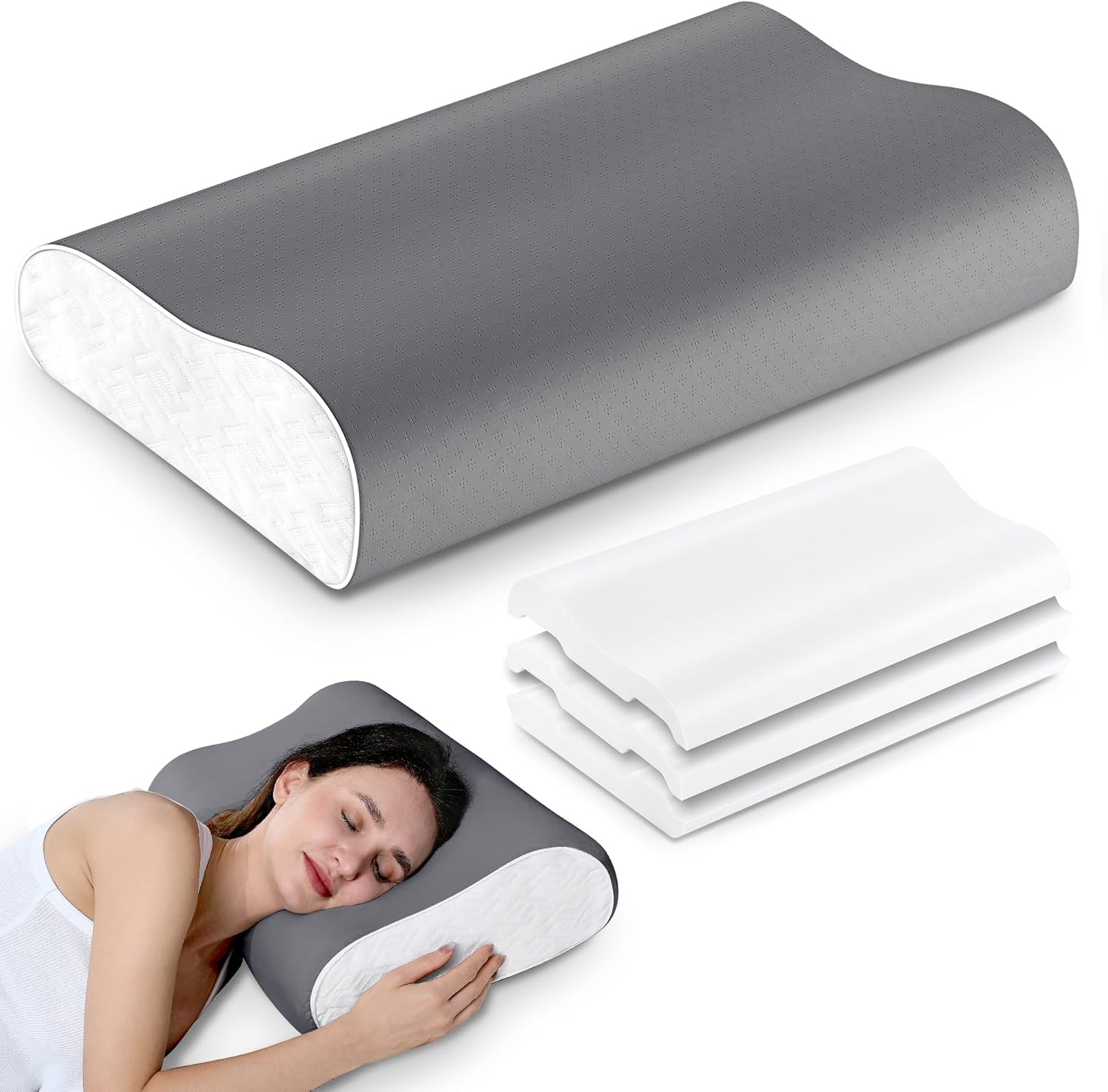
- Height-adjustable design accommodates different preferences (removable 1.18" pad).
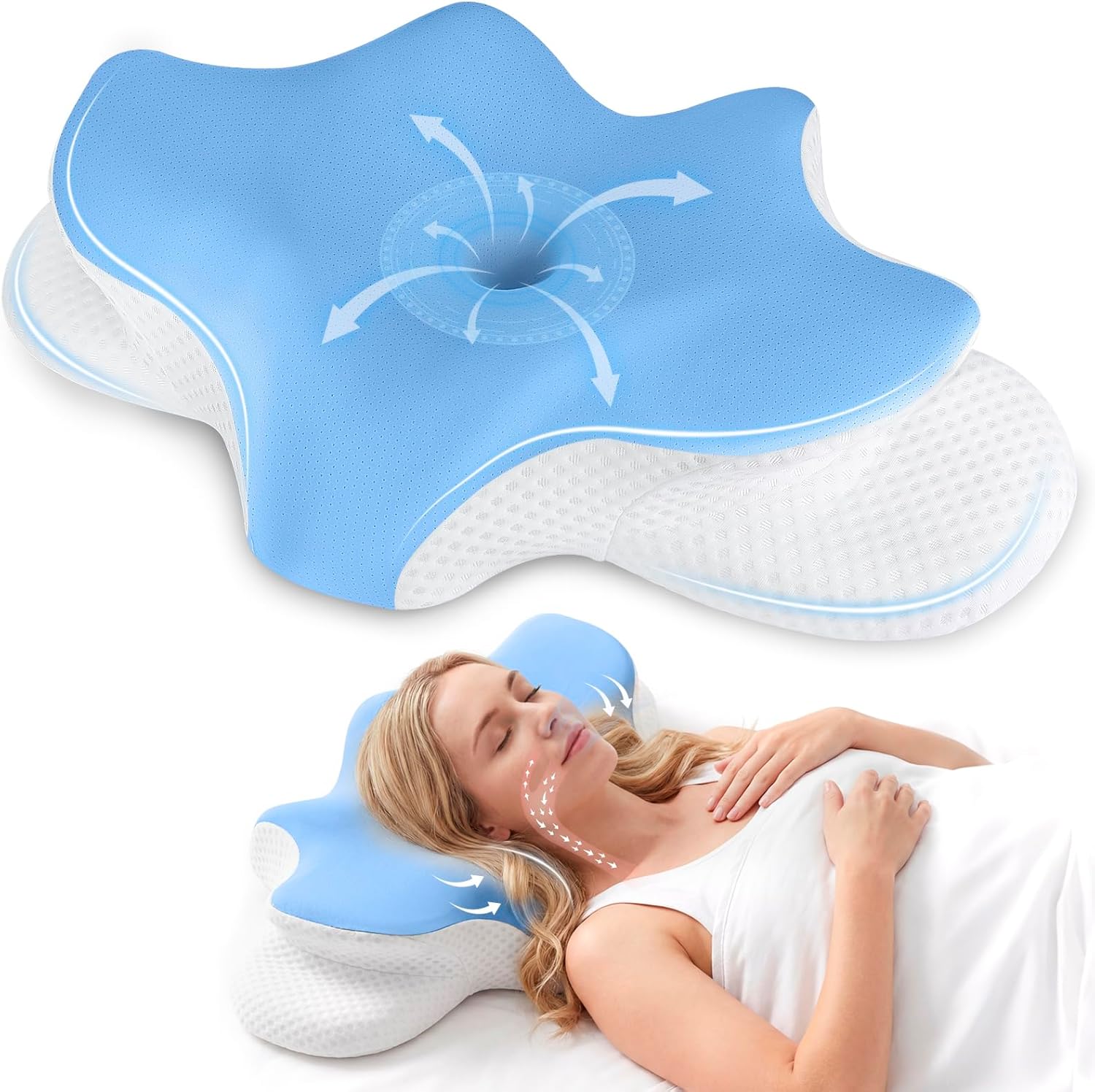
- Contoured shape with side cutouts effectively accommodates CPAP masks and tubing.
- OEKO-TEX certified, cool-touch cover is removable and machine washable.
- Memory foam core is CertiPUR-US certified for safety and low emissions.
Cons
- Memory foam is notably very firm and dense, which some find uncomfortable.
- Primarily designed for CPAP users; its benefits are less clear for non-CPA users.
- Adjustable loft may still be too high for some, particularly smaller-framed individuals.
- May take 1-2 weeks for the neck to adjust to the ergonomic curve, per manufacturer note.
- Initial firmness can make it less ideal as a best pillow for combination sleepers who shift positions frequently.
Our Verdict
The Joynox CPAP Pillow is a specialized, well-constructed option that succeeds in its primary goal: providing firm, supportive cushioning for CPAP users who sleep on their side. Its adjustable height and contoured design with side cutouts directly address common CPAP mask issues like air leaks and facial pressure. While its very dense foam provides excellent support for neck alignment—a key feature for a pillow for side sleepers—it may be too firm for those not using CPAP or who prefer a softer feel. Its cooling cover and washability are practical bonuses. Ultimately, it's a niche product that performs excellently for its target user but has a more limited appeal for the general population seeking the best pillow for side sleepers.
Who Should Buy This?
This pillow is engineered for a specific audience: adults who use CPAP machines and predominantly sleep on their side. Its design directly targets the pain points of CPAP therapy, such as mask displacement, air leaks, and facial pressure. The firm, supportive foam and elevated loft are tailored to provide the necessary spinal alignment for side sleeping, which often requires a higher pillow. It could also serve as a firm pillow for side sleeper who doesn't use CPAP but requires very substantial, unyielding support. However, its specialized contours and extreme firmness make it less versatile for back or stomach sleepers, or for those seeking a plush, conforming memory foam side sleeper pillow.
Buy It If:
- CPAP users who are side sleepers experiencing mask leaks or facial pressure.
- Side sleepers with broader shoulders or larger frames needing high loft support.
- Anyone seeking a very firm, orthopedic memory foam pillow for neck pain.
- Sleepers who prefer a pillow that retains its shape without flattening overnight.
- Those looking for a pillow for back sleepers and side sleepers who prioritize firm cervical support.
Skip It If:
- Sleepers who do not use a CPAP machine and won't benefit from the specialized cutouts.
- Anyone who prefers a soft, plush, or down-like pillow feel.
- Combination or stomach sleepers who need a lower, flatter profile.
- People sensitive to very firm support; several reviews noted it was "TOO firm".
- Those seeking a best cooling pillow for side sleepers as a primary feature; while the cover is cool-touch, the dense foam may retain some heat.
Performance & Features
Based on analysis of product specifications and verified customer reviews, the Joynox pillow excels in providing stable, firm support but has a distinct feel that won't suit everyone.
What Works Well
The pillow's greatest strength is its supportive performance for side sleeping with CPAP equipment. Multiple users confirmed it "holds up well overnight without flattening" and its shape "works well for side sleeping with CPAP" by keeping tubing organized and reducing mask pressure. The adjustable height is a practical feature, allowing users to customize the loft—a critical factor for finding the best pillow for side sleepers with neck and shoulder pain. The firm memory foam provides consistent, unyielding support that maintains neck alignment, which is essential for preventing strain.
What Could Be Better
The primary performance drawback is its extreme firmness. One reviewer explicitly stated the memory foam is "very hard and dense" and that their "head keeps slipping off the pillow because it is TOO firm." Another noted it was "a bit on the firm side" even for someone who typically prefers firm pillows. This limits its appeal as a versatile best pillow for side and back sleepers, as the high, firm loft may not accommodate back sleeping comfortably for all users. The break-in period mentioned by the manufacturer (1-2 weeks for neck adjustment) is also a consideration.
Build Quality & Design
The pillow features a core of "100% memory foam" that is CertiPUR-US certified. Reviewers consistently describe it as firm and dense with a "quick rebound"—meaning it returns to shape rapidly rather than slowly contouring. This differs from traditional slow-response memory foam. The cover is a blend of 85% nylon and 15% spandex, certified by OEKO-TEX, which means it's been tested for harmful substances. Users note the fabric feels "cool to the touch," which helps address heat buildup—a common concern with memory foam. The cover is removable and machine washable, a significant advantage for hygiene.
Fit is highly dependent on sleeping position and body type. The pillow is explicitly designed "for larger-framed male users," and its adjustable heights (5.11" or 5.9" with pad, 3.93" or 4.72" without) offer customization. For side sleepers, the higher loft is generally recommended to fill the space between neck and mattress. The contoured shape with side cutouts is designed to cradle the head and neck while creating space for a CPAP mask. However, some smaller-framed users found the loft too high even on the lowest setting, indicating it's best suited for people with broader shoulders. As a pillow for side sleepers with arm under pillow, the cutouts might provide relief, but the firmness could be an issue.
Care is straightforward: the zippered pillowcase is removable and machine washable in cool water (max 104°F/40°C) with mild detergent. The memory foam core should not be washed. The foam is designed to be durable and resistant to permanent indentations, with reviews noting it "does not easily flatten out and maintains its shape." The quick-rebound foam suggests it will retain its supportive properties over time. Allowing 48-72 hours for full expansion after unpacking and airing out for 3-5 days to dissipate any initial odor is recommended by the manufacturer.
Value for Money
Priced at $36.99, this pillow sits in the mid-range for specialized orthopedic pillows. For its target audience—CPAP users who are side sleepers—the value is high, as it directly solves expensive problems like mask leaks and discomfort that can compromise therapy. The inclusion of a certified, washable cover and height adjustability adds to the value proposition. For the general consumer simply seeking a supportive pillow for side sleeping, the value is more nuanced; while the construction quality is good, the extreme firmness and CPAP-specific design mean you're paying for features you may not use. Compared to a generic memory foam side sleeper pillow, it's competitively priced, but its niche focus limits broad appeal.
Specifications
Specifications
Top Alternatives
If this isn't the right fit, these closely-related options may be better for your needs.

How We Tested
This evaluation is based on a detailed analysis of the manufacturer's product specifications, feature descriptions, and aggregated customer reviews. No physical hands-on testing was conducted for this assessment.
Testing Criteria
The product was evaluated against key criteria for side sleeper pillows: loft/height adjustability, firmness and support level, material quality and certifications, design features for specific use-cases (CPAP compatibility), temperature regulation, ease of care, and overall value as reported by users.
Data Sources
Analysis sourced from the product's Amazon listing, including its feature bullets, specifications, and six verified customer reviews detailing firsthand experiences with support, firmness, CPAP compatibility, and comfort.
Note: The manufacturer clearly states this is not a clinically approved medical device and advises those with severe neck issues to consult a doctor. Reviews, while limited in number (6 total), show a consistent pattern: high marks for CPAP functionality and firm support, with reservations about the foam being too firm for some. This suggests a product that excels in its niche but has a specific feel.